

On our recent northern European cruise, one of the most unforgettable days unfolded when our ship docked in the charming port town of Akureyri. Nestled at the base of snow-capped mountains and set along a long fjord, Akureyri might be small, but the area is packed with natural wonders. Our excursion took us deep into the heart of Iceland’s dramatic landscapes, from lava fields and geothermal marvels to one of the country’s most legendary waterfalls. Here’s a recap of our adventure and why these places are so unique.
Our journey kicked off with a visit to Lake Mývatn and the pseudocraters formed by powerful steam explosions. When scorching lava flowed over wetlands or marshy ground, it trapped water beneath the surface. As the water heated and turned to steam, it burst through the lava with explosive force, shaping the dramatic, crater-like formations you see today.


Something I never see mentioned about Lake Mývatn is the midges! They are everywhere!! Thankfully, they don’t bite, but they are a nuisance. This is why you’ll see netting for heads sold in the gift shop. You’re welcome for the heads up! 😉
We were happy to leave the midges behind as we headed to Dimmuborgir, a surreal lava field east of Akureyri. Walking through this area feels like stepping onto another planet. Jagged rock formations rise from the earth like ancient ruins. These structures were formed over 2,000 years ago during a volcanic eruption, when molten lava flowed over a lake and caused the water to boil away, leaving behind steaming, hollow lava pillars and caves.


What makes Dimmuborgir especially intriguing is its folklore. Legend has it this is the home of trolls and Yule Lads (mischievous Santa-like figures from Icelandic Christmas legends). It’s easy to see why. The eerie formations and moss-covered stones almost look like they’re alive.


From Dimmuborgir, we continued further into one of Iceland’s most geologically active zones. This area sits atop the Mid-Atlantic Ridge, where the North American and Eurasian tectonic plates meet, resulting in bubbling earth, steaming vents, and vibrant geothermal colors are everywhere.
We visited Námafjall (also known as Hverir), a geothermal field near the lake that smells like sulfur and looks like Mars. Think steaming fumaroles, boiling mud pots, and color streaks from the minerals in the soil. It’s an otherworldly reminder of the power simmering just beneath Iceland’s surface.
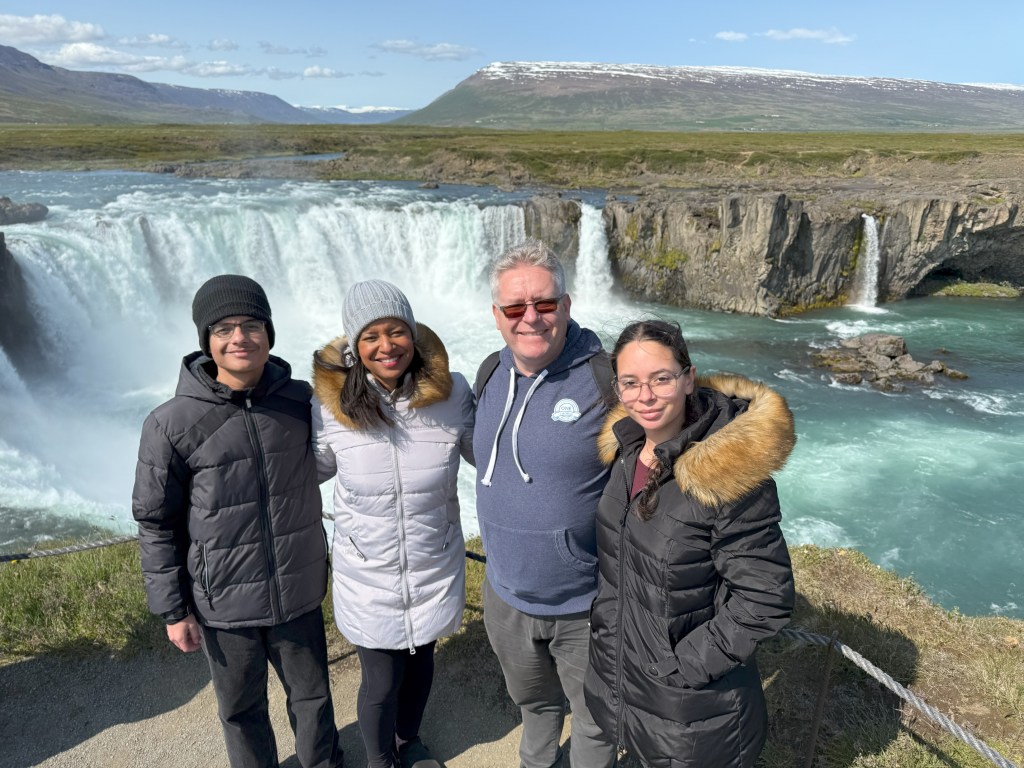
No trip to northern Iceland is complete without a visit to Goðafoss, one of the country’s most stunning waterfalls. Its name means “Waterfall of the Gods,” and it’s tied to a powerful moment in Icelandic history. Around the year 1000 AD, when Iceland officially converted to Christianity, a local chieftain is said to have thrown his Norse god idols into the falls, symbolizing the nation’s new faith.
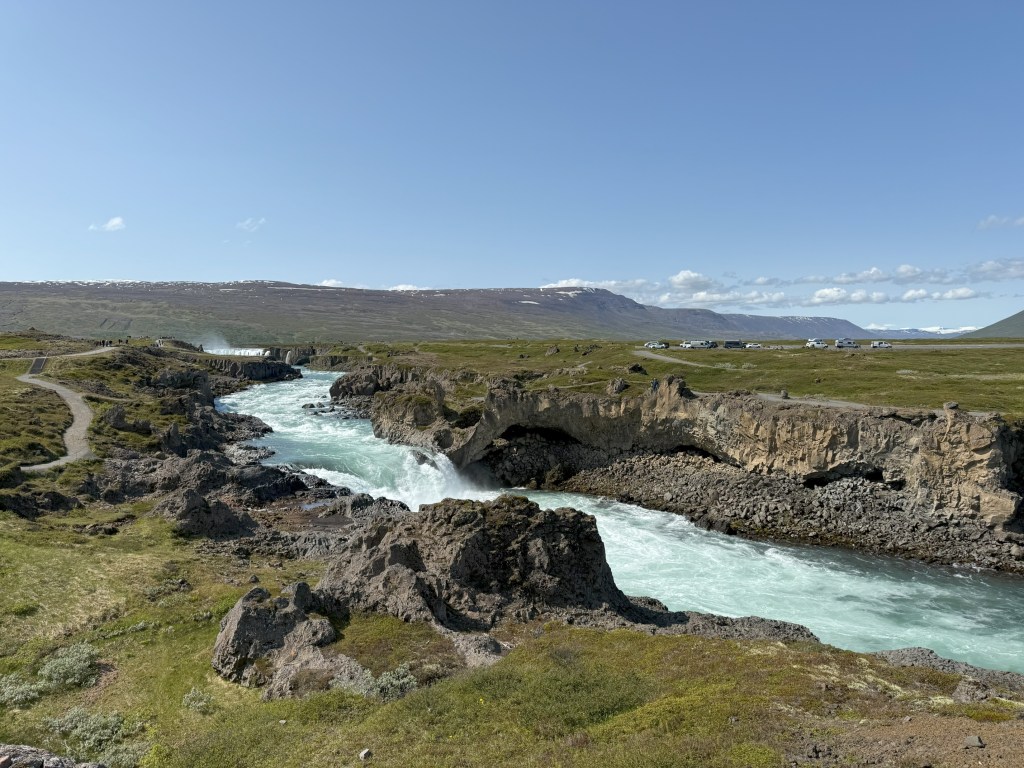
Beyond its history, Goðafoss is simply breathtaking. The curved cascade tumbles into a turquoise pool below, surrounded by volcanic rock. We had time to walk around the viewing paths and take in different angles, each one more impressive than the last.


This day was the perfect mix of storytelling, science, and scenery. Iceland’s landscapes are shaped by fire and ice, and from Akyreyri you can experience it all: lava, waterfalls, hot springs, and ancient legends. It’s raw, untouched beauty that sparks your curiosity and makes you feel small in the best way.
To Reykjavík and Beyond! / Norwegian Prima / Ísafjörður: Iceland’s Hidden Fjord Gem / Chasing the Midnight Sun in Akureyri / Exploring Ålesund: Norway’s Most Striking Seaside City / Flåm, Norway: A Fairytale Tucked Between the Fjords / Where Mist Meets Magic: Bergen’s Quiet Grace / Wandering Amsterdam: A Day of Reflection, Beauty, and Shopping / Belgian Fam and London Icons: Cruise Finale

As a full-service travel agent, I would love to be of assistance to you. I am passionate about what I do and pour that energy into crafting perfectly planned itineraries for you. Email ebony@familytraveladventuresllc.com to learn more.

 Family Travel Adventures LLC